
Glue Therapy for Varicose Veins
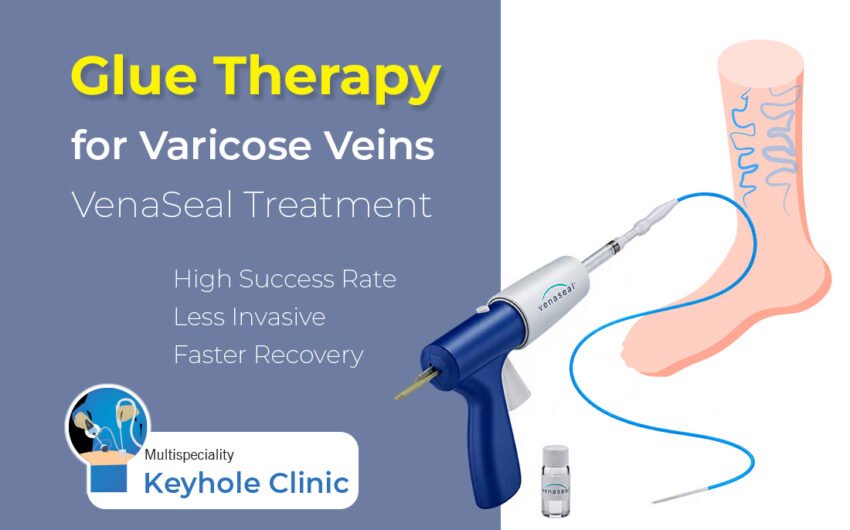
Glue therapy for Varicose Veins (also called VenaSeal Treatment) is a minimally invasive treatment for venous reflux, the underlying problem in many varicose veins.
Normally, valves inside the leg veins help blood travel upward toward the heart. If the valves become weak, blood can flow backward and pool in the leg. This can cause:
- Bulging/twisted varicose veins
- Aching or heaviness
- Leg swelling
- Burning or itching
- Skin discoloration
- In advanced cases, venous ulcers
With glue therapy, a doctor places a thin catheter into the diseased vein, usually using ultrasound guidance. Small amounts of a medical cyanoacrylate adhesive are released inside the vein. The vein is compressed and sealed, and blood is redirected through functioning veins.
What happens during the Glue therapy?
Typically in Glue therapy:
- The doctor performs a duplex ultrasound to identify the refluxing vein.
- The leg is cleaned and numbed at the catheter-entry site.
- A catheter is inserted into the abnormal vein.
- Medical adhesive is delivered at several points.
- The vein is compressed briefly to help it close.
- The catheter is removed and a small dressing is applied.
The procedure commonly takes around 30–60 minutes, although this varies with the number and location of veins treated.
Unlike laser or radiofrequency treatment, there is no heat or tumescent anesthesia along the entire vein.
Is Glue Therapy painful?
Usually there is relatively little discomfort.
You may feel:
- A needle prick from the local anesthetic
- Pressure as the catheter is inserted
- Some pulling or mild discomfort during treatment
- Tenderness or tightness along the treated vein afterward
Pain levels vary considerably between patients.
What happens to the vein after it is glued?
The treated vein is no longer carrying significant blood. Your body gradually breaks it down and it becomes a fibrous cord.
Importantly, the glue does not circulate throughout your body. It remains at the treatment site.
How effective is Glue therapy?
Clinical studies have generally found cyanoacrylate closure to be an effective method of closing refluxing superficial veins, with good short- and medium-term vein-closure rates.
However, closing the main refluxing vein doesn’t necessarily make every visible varicose vein disappear immediately. Branch varicose veins may need additional treatment, such as:
- Foam sclerotherapy
- Phlebectomy (removing small veins through tiny skin openings)
- Occasionally another procedure
New varicose veins can also develop later because venous disease is chronic.
What are the risks?
Most complications are minor, but you should understand them before choosing the procedure.
More common
- Bruising
- Mild pain/tenderness
- Swelling
- Redness
- A firm or cord-like feeling along the treated vein
- Inflammation around the treated vein
Less common
- Infection
- Skin reaction
- Phlebitis/inflammation
- Numbness or altered sensation
- Extension of clot toward the deep venous system
- Deep-vein thrombosis (DVT)
Rare but important
A significant allergic or inflammatory reaction to the cyanoacrylate adhesive can occur. Severe reactions are uncommon, but a history of significant adhesive/cyanoacrylate allergy should be discussed with the specialist.
Seek urgent medical attention after treatment if you develop sudden chest pain, difficulty breathing, coughing blood, or significant one-sided leg swelling/pain, because these can be symptoms of a blood clot or pulmonary embolism.
Who may be a candidate?
Glue treatment can be considered when ultrasound shows significant reflux in a superficial vein such as the:
- Great saphenous vein
- Small saphenous vein
- Certain accessory saphenous veins
But the visible varicose veins themselves aren’t enough to determine treatment. The duplex ultrasound is crucial.
A specialist will typically look at:
- Which vein has reflux
- Length and diameter of the vein
- Severity of reflux
- Deep-vein circulation
- Previous DVT
- Skin changes or ulcers
- Previous vein procedures
- Pregnancy status
- Allergies
- Your symptoms and treatment goals
What about recovery after Glue Therapy?
Many people can walk immediately after the procedure and return to normal activities relatively quickly.
Your doctor may advise temporarily avoiding:
- Very strenuous exercise
- Heavy lifting
- Long periods of standing
- Hot baths/saunas
The exact restrictions depend on the procedure and your individual circumstances.
The appropriate treatment depends on which veins are involved, ultrasound findings, symptoms, and your medical history. A vein specialist surgeon should perform a duplex ultrasound before recommending glue closure.
Other Treatment Options for Varicose Veins
- LASER Treatment for varicose Veins – In this procedure, a Laser light, which is a highly focused beam of light is directed at the inner lining of the vein with extreme precision.
- Sclerotherapy
- Phlebectomy
- Ultrasound Guided Keyhole Surgery for Varicose Veins
- Triple Therapy for Varicose Veins
Keyhole Clinic is the best center for varicose veins treatment in Kerala and has very experienced surgeons, including Dr. R. Padmakumar, Dr. Madhukara Pai, and Dr. Resen Rajan. Dr. Resen Rajan is a varicose veins specialist in Kochi and specializes in LASER Treatment for varicose veins and Glue therapy.
What is the best treatment for varicose veins?
Our Center has devised a very special treatment, Triple Therapy. Triple Therapy for Varicose Veins is considered the best treatment option for varicose veins. This therapy combines LASER Treatment, Saphenofemoral ligation by Keyhole Surgery, and Sclerotherapy / Glue Therapy. This gives the best result for varicose veins.


